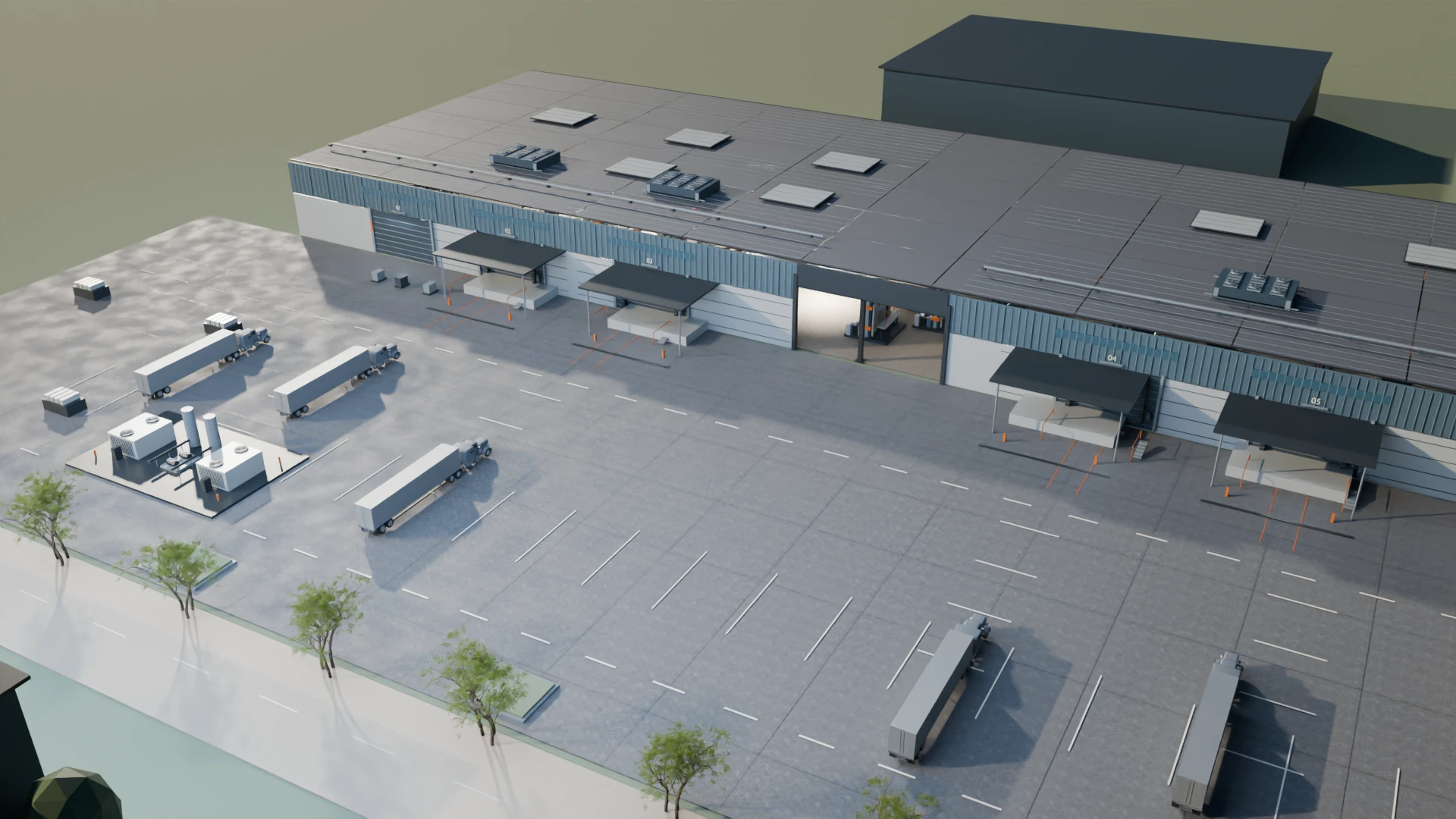
MYND / MANUFACTURING
Industry.
Across scales.
Design, production and inspection.
Scroll to explore ↓
Design. Production. Inspection.
Explore capabilities ↗MYND / MANUFACTURING
Capabilities
Design, process architecture and verification.
Connect design interpretation, process architecture, and verification. These subjects are presented together because a local improvement can create a downstream problem. Faster handling means little if location becomes ambiguous. More inspection means little if the result cannot inform a decision. The design challenge is coherence across the whole sequence.
Translate function into constraints
01 / Interpretation
Translate function into constraints
Read the interface
Begin where the part meets something else: a bearing seat, sealing face, fastener pattern, or assembly datum. Identify the relationship that matters before selecting a process. Ask which variation affects function and which merely changes appearance.
Expose the trade
Record the tension between access, rigidity, material removal, and measurement. The goal is not a universally optimal process. It is a defensible choice under stated constraints. An unresolved material condition or assembly assumption belongs beside the process sequence, not in a footnote discovered after tooling decisions.
Design the exception alongside the cycle
02 / Architecture
Design the exception alongside the cycle
A nominal sequence is only one path through a cell. A process design also asks what happens when location is uncertain, a check is inconclusive, or work stops between operations. Recovery should preserve knowledge of the workpiece state. Restarting motion is not the same as restoring a known process condition.
A useful architecture makes the safe, inspectable state explicit. The appropriate safeguards remain an engineering question requiring equipment-specific assessment; this diagram is not a safety-system design.
03 / Evidence
Let the result change the plan
Verification starts with a question precise enough to fail. Can the locating scheme support the required relationship? Can a measurement distinguish process variation from measurement uncertainty? What evidence justifies moving to the next stage? These questions define an investigation more honestly than an unsupported list of machines or tolerances.
A decision record links each assumption to an observation, a limitation, and a next action. Negative results remain valuable when they eliminate a fragile approach. Progress means narrowing uncertainty while preserving the reasons behind a choice - not accumulating reassuring numbers detached from function.
Contact: hello@myndlabs.tech. A useful opening is the constraint that resists an easy answer.
Context before capability
Industries
An industry label is not a manufacturing plan. The more useful starting point is the part's duty: what it touches, what loads it carries, how it ages and what happens if it fails. Different duties require different design choices.
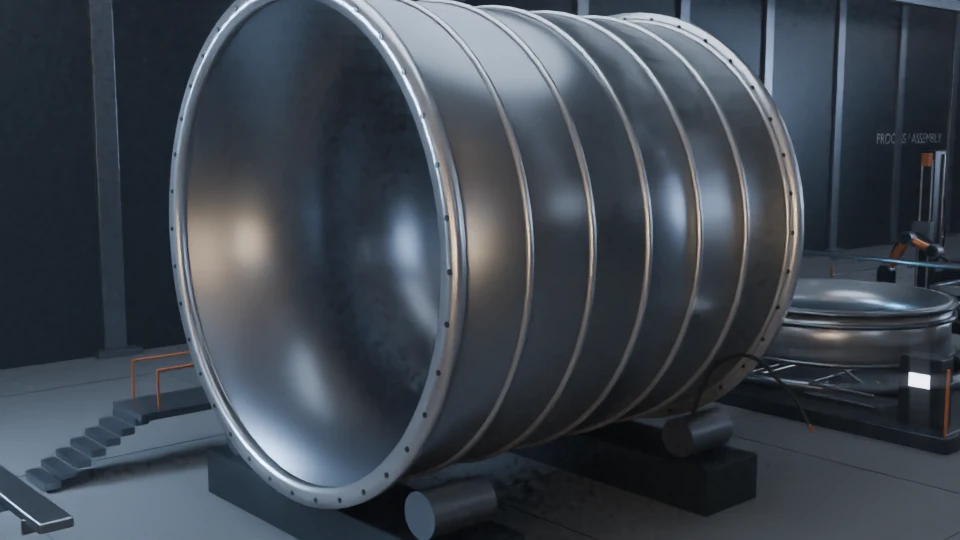
The interface is the brief
The interface is the brief
01 / Precision equipment
A small bracket can carry a large alignment problem. For equipment assemblies, the analysis begins at the mating faces rather than the outside silhouette. Which surface establishes position? Which fastener secures it? Can the assembly be adjusted without hiding a dimensional error? A part record preserves those answers alongside its revision.
Design question: can the drawing explain the assembly's intent to someone who has never seen the finished machine? If not, the missing information belongs in the brief before it becomes a shop-floor interpretation.
Three duties, three different conversations
Three duties, three different conversations
Motion
Moving assemblies invite questions about clearance, stiffness and changing contact. A dimension that appears harmless in isolation may control friction across an entire travel range. The design brief should name the operating envelope, not merely a nominal position.
Exposure
Energy and environmental equipment raise different questions: heat, moisture, debris and access for maintenance. Material choice and surface treatment need a stated context. A finish should answer a functional need rather than act as shorthand for durability.
Replacement
Long-lived machinery makes interchangeability an engineering issue. A replacement part must meet the intended interface without inheriting undocumented adjustments. The inquiry extends beyond making one example fit to explaining what future examples must preserve.
Compare constraints, not prestige
Compare constraints, not prestige
A shared brief brings these contexts together through load, environment, inspection access and consequence of failure. It should also expose when a design choice exceeds available knowledge. No sector badge can substitute for that boundary.
Define what a component must do before deciding how to make it.
Evidence before assurance
Quality
Quality connects requirements, evidence and review.
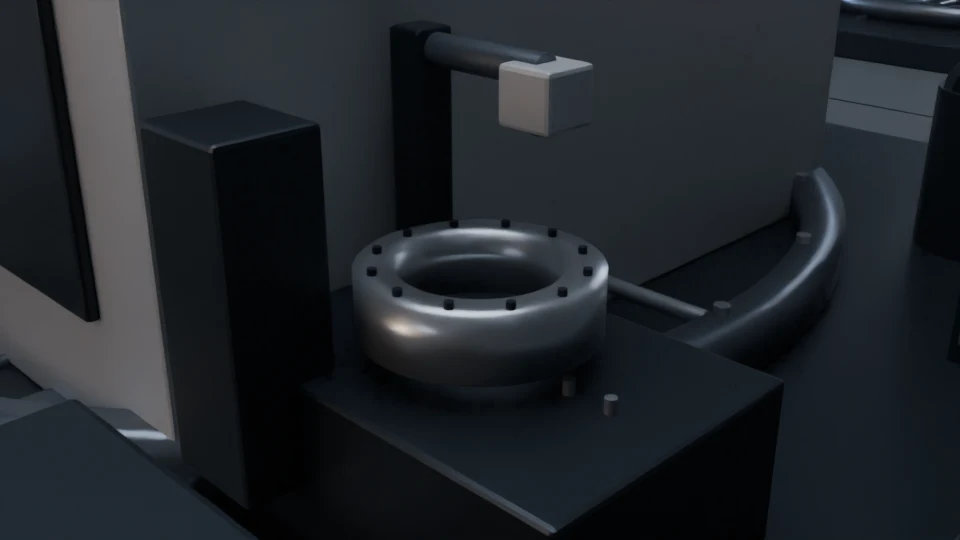
Give every requirement a place
Give every requirement a place
A useful quality ledger begins before inspection. It connects each important characteristic to its purpose, acceptance rule and source of evidence. The point is not to accumulate records. It is to prevent a result from becoming detached from the requirement it supposedly proves.
Requirement: identify the controlling drawing revision and the feature being judged. Resolve conflicting notes rather than choosing the most convenient interpretation.
Evidence: record the method, conditions and result needed for that judgment. A number without context can appear precise while answering the wrong question.
A result is not yet a release
A result is not yet a release
Review connects an observation to a decision. Separate measurement from approval. This separation keeps measurement from silently becoming approval. An ambiguous result needs a defined hold state, while any accepted departure needs its own scope and authority. Neither should be buried in a comment that later readers can overlook.
Design the uncomfortable case first
Design the uncomfortable case first
Consider a feature near its acceptance limit. Can the chosen method resolve the difference that matters? Could temperature, setup or access change the interpretation? Repeating a measurement is not automatically an answer. The framework must distinguish new evidence from repeated uncertainty.
Records need to remain understandable when the easy answer is unavailable. Useful criticism starts with a specific gap in the logic, not a promise of perfection.
Contact: hello@myndlabs.tech.
Maintenance
The machine needs a memory
The machine needs a memory
Maintenance belongs in the initial drawing, not in the space left after equipment selection. The first design question is whether a person can understand its condition without reconstructing its entire history.
An equipment record connects component identity, revision, access constraints, isolation references, and unresolved defects. Its purpose is not to accumulate paperwork. It is to keep a replacement from quietly becoming a redesign, and to make missing information conspicuous before intervention begins.
Design the interruption
Design the interruption
Recognize. Separate a useful symptom from a flood of alarms. What changed, where did it appear, and which observations remain uncertain?
Reach. Reserve physical access for inspection and replacement. A removable cover means little if adjacent equipment blocks the component behind it.
Re-establish. Define the evidence needed after an intervention. Reassembly, restored motion, and acceptable output are different questions, not interchangeable milestones.
Recovery is a design requirement
Recovery is a design requirement
Observe, intervene, verify and review. Equipment-specific safety requirements and competent review must precede actual work. The design question is broader: does the design make careful recovery possible, or does it reward getting back into motion before the reason for failure is understood?
Open question: which records remain useful at the machine, and which belong in a deeper technical archive?
Engineering
Begin at the interface
Begin at the interface
An integrated cell has a boundary problem: a carrier, fixture, robot, and inspection position must agree on what a part is and where it sits. A clean arrangement on a drawing does not establish that agreement.
Engineering development should expose these interfaces before choosing an impressive machine silhouette. Datum strategy, tool access, part variation, and measurement access can pull a layout in different directions. The useful drawing is the one that makes those conflicts discussable.
Keep assumptions beside decisions
Keep assumptions beside decisions
Part presentation. What locates the workpiece, and which variation reaches the tool? A fixture needs an explicit locating logic, not merely a plausible outline.
Measurement. What characteristic determines acceptance, and can the check actually resolve it? A sensor symbol cannot stand in for a measurement argument.
Control. Which conditions permit a transition? Distinguish a requested action from an observed state so that the design does not confuse instruction with completion.
These entries belong in a decision record. Each should retain its assumption, alternative, and unresolved test rather than flattening development into a sequence of confident conclusions.
Evidence closes the loop
Evidence closes the loop
The next credible step is not a performance claim. It is a bounded question with a test that could disprove the preferred answer. Can the part be located repeatedly? Can the critical surface be reached? Can an ambiguous result be held for review?
Throughput, tolerance and readiness need defined conditions and evidence.
Contact
Bring a specific question
Bring a specific question
Contact: hello@myndlabs.tech.
A useful opening names the decision at stake. Perhaps a fixture hides the feature it must locate. Perhaps a inspection method cannot distinguish process drift from measurement noise. Perhaps maintenance access conflicts with a compact footprint. Concrete tensions give a conversation somewhere honest to begin.
Send context, not a sales brief
Send context, not a sales brief
Describe the object or process in plain language, the constraint that matters most, and what remains unknown. Separate observations from interpretations. If a sketch helps, explain its scale and the relationship it is meant to show rather than treating visual polish as technical proof.
Keep an initial message non-confidential. Avoid personal information, proprietary drawings, access credentials, or material you lack permission to share. A short description can establish the subject without transferring a complete technical archive.
Leave room for a different answer
Leave room for a different answer
The most valuable contribution may challenge the premise: a robot may not be the right tool, an extra transfer may create unnecessary variation, or a simpler fixture may make inspection clearer. Keep the reason for a change visible.
Start with a clear question and its context.